From revolutionary echoes to regional equations Lebanon Iran and the unfinished struggle
From revolutionary echoes to regional equations: Lebanon, Iran, and the unfinished struggle
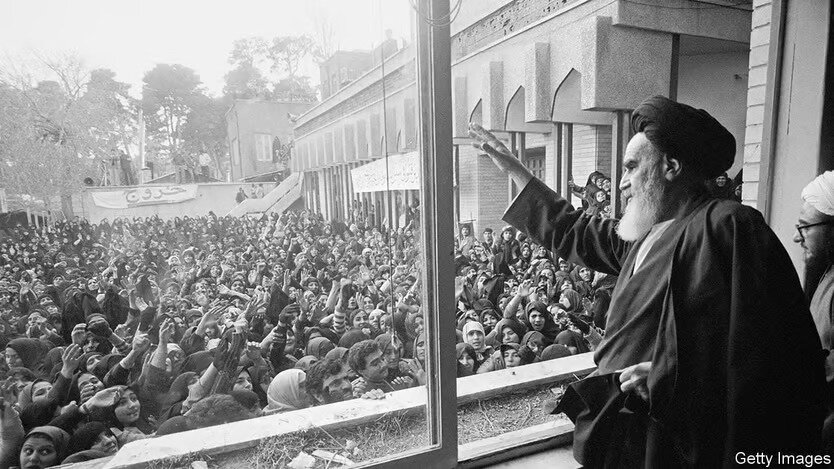
BEIRUT — From the earliest days of Imam Khomeini’s revolution, the Shiites of Lebanon were not distant observers but active moral participants in its unfolding narrative.
The not-so-innocent disappearance of Sayyed Musa al-Sadr in 1978 had left a profound vacuum in Lebanon’s Shiite leadership, intensifying a collective sense of marginalization and vulnerability.
At the same time, the Camp David Accords and Egypt’s gradual withdrawal from the anti–Israel conflict signaled a historic shift in regional balances.
For many Lebanese Shiites, the Iranian Revolution of 1979 emerged as both a spiritual revival and a political alternative—a declaration that resistance to hegemony was not only possible, but victorious.
The slogan of Imam Khomeini, “Today Iran, tomorrow Palestine,” resonated powerfully across Arab and Muslim streets.
In Beirut, crowds chanted, “Khomeini, lead on, we are your soldiers in liberation.”
The revolutionary climate placed Palestine once again at the center of regional consciousness and inspired a generation seeking dignity after decades of defeat.
When Washington advanced its vision of a reshaped West Asia, the 1982 Israeli invasion of Lebanon—supported politically and militarily by the United States—was not merely a campaign against Palestinian resistance.
Hezbollah had not yet been formally established. Rather, the invasion was preemptive: an attempt to prevent the birth of a resistance axis that could overturn the strategic gains Washington believed it had secured through Camp David and Egypt’s exit from confrontation.
This broader strategy was already in motion. The Iran–Iraq War had been ignited in 1980, draining revolutionary Iran. The Muslim Brotherhood’s insurgency in Syria had preceded it. In Afghanistan, the United States and Saudi Arabia had mobilized militant networks against the Soviet Union.
These theaters were interconnected, forming a web designed to contain the revolutionary momentum radiating from Tehran and to consolidate Saudi leadership under American patronage.
Yet history unfolded differently. Over a decade of confrontation, the American project in Lebanon faltered. The U.S. Marines withdrew.
The May 17 Agreement—Lebanon’s Camp David equivalent—collapsed. Syria withstood internal destabilization. And in the second decade, resistance matured.
The Israeli withdrawal from southern Lebanon in 2000—without negotiation, conditions, or compensation—marked a decisive turning point. For the first time, an Arab resistance had compelled Israel to retreat by force alone.
Following the collapse of the Soviet Union, Washington expanded its ambitions globally, achieving victories in Europe and attempting to impose new frameworks in West Asia through the Madrid process and the Taif Agreement.
The core front, however, centered on Israel and the resistance, remained unresolved. The 2006 war, entrusted once more to Israel as a proxy, sought to crush Hezbollah and inaugurate a “New Middle East.”
Instead, it ended in failure and reshaped regional deterrence equations.
When conventional strategies faltered, chaos was weaponized. Militant extremist groups, once cultivated for other battlefields, reemerged in Syria and Iraq. Yet even this wave was ultimately repelled.
Russia reasserted itself through Syria; Iran emerged stronger despite decades of sanctions and war; Hezbollah evolved into a regional actor whose influence could not be dismissed.
Today, Washington’s rhetoric speaks of “countering Hezbollah’s dominance,” while new sanctions target financial networks, including institutions like al-Qard al-Hasan.
Such measures are framed as technical or financial, yet they unfold within a broader strategic contest.
Iran, targeted since 1979, is challenged not only for its policies but for its very model: an independent state aligned with Russia and China, openly opposing Israeli expansion and supporting resistance movements in Lebanon and Palestine.
The struggle, therefore, is neither episodic nor confined to a single battlefield. It resembles chess, but unlike chess, the second round does not begin from the original positions. America, Israel, and Saudi Arabia are not what they were three decades ago.
Nor are Iran, Syria, Iraq, or Hezbollah. Power balances have shifted in complex, asymmetric ways.
Illusions that imperial powers quietly accept the outcomes of popular struggles have repeatedly proven false. Pressure ebbs and returns in new forms. The contest remains dynamic, shaped by cycles of retreat and resurgence.
Yet from Beirut’s early chants to today’s regional equations, one constant endures: the belief among many that resistance is not merely reaction, but identity—and that history, though prolonged and costly, has not ended in the favor of those who once claimed it had.
source: tehrantimes.com