Zardalu Abad monuments indicate cultural and historical developments of Ilam
Zardalu Abad monuments indicate cultural and historical developments of Ilam
TEHRAN-- Examples of evidence and identifications from prehistoric to historical periods and the Iron Age, as well as evidence from the Sassanid period and early Islamic centuries, can be seen in the ancient historical monuments of Zardalu Abad in Mishkhas region, Ilam, which indicate the important cultural and historical developments.
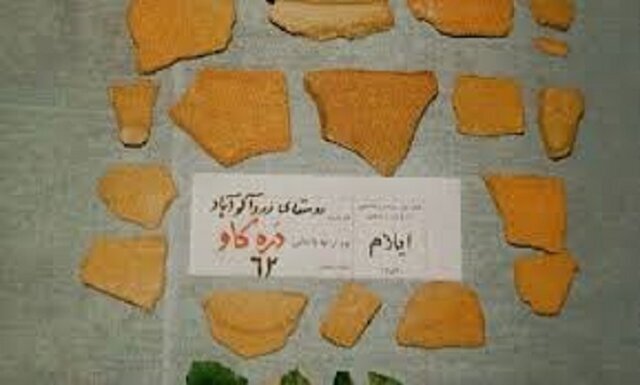
Habibollah Mahmoudian, a specialist in prehistoric archaeology, told ISNA that the village of Zardalu Abad is located on the northern edge of the Mikh Valley and River, which is about 1,481 meters above sea level and is higher than other villages in the Mishkhas region, and the climate is temperate mountainous.
He noted that the prominent monuments of the area of the village include Zardalu Abad Hills, Darreh-ye Kav (Kav valley), and Zardalu Abad historical cemetery.
“This hill and its surrounding area are among the most important ancient sites west of Zardalu Abad village and include the natural hills in the northwest and the eastern and southern areas.”
The archaeologist explained: “The climate of this geographical area is temperate mountainous, the infrastructure of the hill is rocky and the surrounding area is sandy, and the side road between the fields on the southwestern side forms the adjacent features of this hill.”
Mahmoudian added that there is a stone quarry of the type of stones on the natural hill east of the site used in construction of ancient Bronze Age tombs, pottery of the type of jars and various containers, mostly of the type of simple wheel-made containers with a grayish brown and light orange color, which are densely observed on the surface of the site.
“This hill is located in the eastern part of the village due to the slope, on a sloping surface and connected to rural houses.”
He stated that construction of village houses has destroyed part of the main hill; another part of the site has been converted into a nursery and garden, and the remaining area is under cultivation of agricultural products.
Mahmoudian stated that the remaining pottery from various vessels, axes and stone tools, pieces of glass, and part of a goat-shaped vessel are the most important identifiers observed on the surface of the site. “The cores of the recovered pottery vessels were mostly wheel-made and had bright brick colors, red glazes.”
Part of the western front of the site has been developed for agricultural land, which has made the ancient layer of the hill more visible, he added.
KD
source: tehrantimes.com