Qazvins Baklava should become a global brand says deputy minister
Qazvin’s Baklava should become a global brand, says deputy minister
TEHRAN – Qazvin’s Baklava (layered pastry dessert), as an example of the art and history of people of Qazvin, should become a global brand through coordination and planning, said the Deputy Minister of Handicrafts at the Ministry of Cultural Heritage, Tourism and Handicrafts.
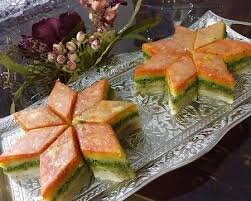
Qazvin Baklava is prepared with layers of different nuts arranged to replicate the colors of the Iranian flag: green pistachios, white/beige walnuts and red.
Maryam Jalali-Dehkordi told IRNA on Monday that tourism, handicrafts and cultural heritage are three aspects of development, adding that from handicrafts such as glassware and carpets in the village of Andaj to famous sweets such as Baklava, all can become the driving force of the economy.
Stating that Qazvin province, with the perspective of culture and investment economics, can become a tourism and income-generating hub by relying on its historical and geographical identity, she clarified that Qazvin, also known as Minoodari land, has a unique history and strategic geography, and the history and geography, at the intersection of rich culture and lifestyle, creates a huge capacity for economic development.
Jalali continued: “Today, we need a comprehensive view and the creation of a value chain, and we must be able to transform ancient motifs found in the buildings such as the Aminiha Hosseinieh or the Chehelsotun Palace into modern designs in handicrafts.”
The official stated: “Branding is a necessity for Qazvin, and this brand must introduce all aspects of the province, from celebrities and history to modern achievements in robotics and engineering, in a coordinated body, because the economy of the future is the economy of identity, distinction, and experience, and Qazvin has all of these elements.”
She noted that extensive infrastructure measures and administrative mechanisms have been carried out in recent years. “Since the Ministry of Cultural Heritage, Tourism, and Handicrafts is a young ministry, we need to organize the structure, attract specialized personnel, and strengthen the executive capacity to carry out our new missions.”
Referring to the impact of Western sanctions and Iranophobia propaganda, Jalali-Dehkordi emphasized the need to increase the resilience of the industries and stated: “The secret to sustainability lies in public participation, and cultural heritage and handicrafts have been preserved by the people, and tourism is also a manifestation of Iranian hospitality, and therefore our policies must be people-oriented and participatory.”
Jalali-Dehkordi announced the Government's special attention and the multiple increase in facilities in this area, and said: “The Planning and Budget Organization has also considered special plans for the areas under our management, and good cooperation has been formed with the Presidential Vice-President for Science and Technology and knowledge-based and creative companies, which can lead to innovation in the supply of products and services.”
According to her, based on the law for the protection of artists, handicrafts are exempt from the guilds law, and currently, with the new regulations, the necessary legal framework has been provided for the activities of specialized organizations.
KD
source: tehrantimes.com