The gap between ceasefire claims and reality in Gaza
The gap between ceasefire claims and reality in Gaza
TEHRAN – For many Palestinians, the word “ceasefire” has become little more than a diplomatic illusion amid Israel’s unrelenting strikes in the Gaza Strip. Since a truce was announced in October, Israeli attacks have killed more than 500 Palestinians in Gaza.
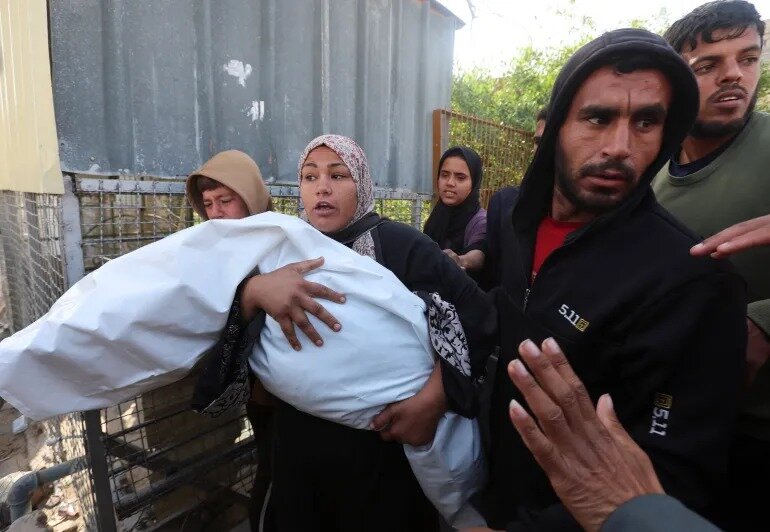
The Israeli killing of two Palestinians, including a three-year-old child on Monday, makes painfully clear how hollow the truce has become. When Israeli naval boats shell displacement tents and drones strike a school sheltering civilians, it becomes impossible to pretend that the situation is calm or stable.
These incidents are not isolated or accidental. They reflect a long-standing pattern in which Palestinian civilians remain exposed to military force even during periods that are nominally meant to protect them. Gaza’s population is confined within zones carved up by the so-called Yellow Line — a system that restricts Palestinian movement while allowing Israeli forces to operate freely. Even under the October 2025 ceasefire, Israeli units continue to fire into these areas, demolish buildings, and conduct operations that keep entire communities in a state of constant uncertainty. The persistence of these actions reveals how little external pressure Israel faces to honor the agreements it signs.
The scale of devastation over the past two years defies comprehension. More than 71,000 Palestinians have been killed, over 171,000 wounded, and nearly all of Gaza’s infrastructure has been reduced to rubble. Rebuilding is estimated to cost around $70 billion, yet reconstruction cannot begin while Israeli forces continue to violate the ceasefire and maintain control over large parts of the territory. For Palestinians, the ceasefire has not delivered safety, dignity, or the basic conditions needed to rebuild their lives.
The United States plays a central role in shaping this reality. Washington announced that the second phase of the ceasefire had begun — a phase that was supposed to include further Israeli withdrawals and the start of reconstruction. But after hundreds of violations, the U.S. has done little to enforce the terms it publicly endorsed. Instead, it continues to provide political cover and military support. This contradiction raises serious questions about whether the U.S. is committed to peace or simply committed to shielding Israel from accountability, regardless of the human cost for Palestinian civilians.
President Donald Trump’s approach reinforces this dynamic. His administration’s policies have consistently aligned with the most hardline positions in Israeli politics, signaling to Israeli leaders that they can act without meaningful consequences. By refusing to apply pressure over ceasefire violations and offering unconditional support, the administration contributes to a political environment in which Palestinian lives are treated as secondary to strategic alliances. This makes any genuine progress toward justice or stability far more difficult.
The latest killings are part of a broader pattern in which Israel faces minimal accountability for actions that harm civilians, even during periods that are supposed to reduce violence. As long as this continues, Palestinians will remain trapped in a cycle of instability and fear. The international community — especially the United States — has the capacity to demand compliance and protect civilians, yet too often chooses not to use that power.
A ceasefire should mean safety. It should mean an end to attacks, a chance to rebuild, and a path toward a more stable future. For Palestinians in Gaza, it has meant none of these things. Until there is real accountability and real pressure on those who violate agreements, the suffering will continue, and the promise of peace will remain painfully out of reach.
source: tehrantimes.com